
Posted in College, Holidays, Insight, Nuts & Bolts, Teens, What's Next? (18 & beyond)

Puzzles & Families, A-Z

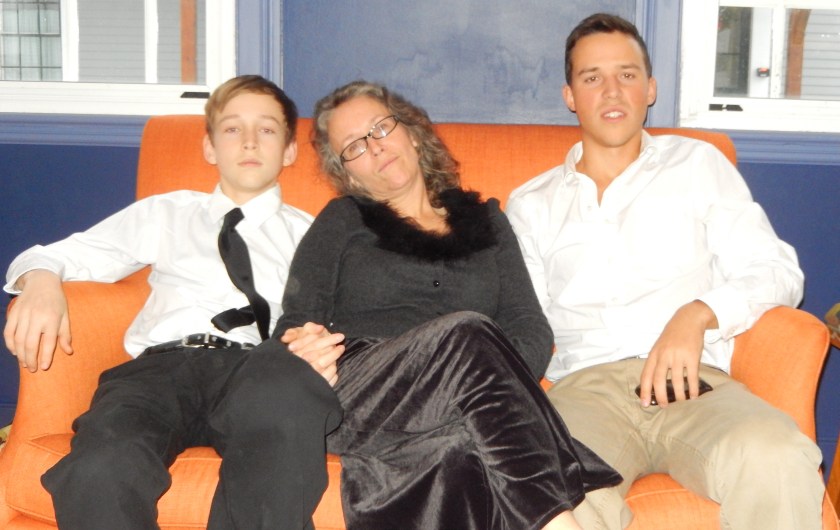
 screen-shot-2017-02-24-at-5-58-09-pm

A 1000 piece puzzle may be the most revealing of family activities, exposing individual traits that shape the function (& dysfunction) of the dynamic of shared lives…

a. A few years back I bought a Will Moses “Thanksgiving Snows” puzzle as a charming kick off to the thanksgiving break

b. (even though we have never finished a puzzle in a decade)

c. my youngest and i started the puzzle; while my husband repeatedly asked if we were ready to pack it up.

d. i finally gave in (gave up) and sorted the edges and the finished bits into ziplocks to give us a better start in the following year

e. a year later i put the puzzle out again

f. my husband taped cardboard together so that the puzzle could be easily relocated

g. our oldest, home from college, never approached the puzzle. (in 2015 or 2016)

h. our youngest and i began the outer edges

i. he complained that no one was returning to the puzzle

j. he then devised a flow chart to assemble the ample sky pieces which he sorted–by cut

k. i showed our oldest his brother’s flow chart of sky pieces as a point of amusement; he was only slightly interested. maybe.

l. i ignored the flow chart and sky pieces and began with the recognizable barns, houses & people

m. i insisted that my husband join me

n. he claimed that he was too overwhelmed to participate so I suggested he begin with the large yellow house, and I set him up with a pile of yellow pieces

o. He insisted he needed all the pieces to the yellow house in order to continue and proceeded to handle every piece in the box in search of more yellow house pieces.

p. From time to time I looked over at his work, and annoyed, ran my hand randomly through the box, and found more yellow house pieces instantaneously than he did with his methodical sorting

q. looking up, he accused me of “taking all the glory,” because I put together the pieces of a man he had apparently found. (He told me to stick to the barn i was building.)

r. i told him that i didn’t realize that the man was his and also that i was working on three barns, two wagons, a few turkeys, a bunch of people, and other unidentifiable items

s. he continued sorting pieces one by one, while i suggested he return to the house with what he already had;

t. i left the puzzle. puzzles are fun for me for a moment, and then maddening.

u. an hour later, i insisted my husband step away from the puzzle

v. we are both afraid of what our youngest will say when he comes down and finds his system ignored

xyz… (to be continued)

post script: in 2017 we finished the puzzle! (in 2018, my husband claimed that he couldn’t find the puzzle in the attic.)

Posted in College, Insight, Round Two, Takes a Village, Teens, What's Next? (18 & beyond), Wisdom of Youth

Children as teachers


Turns out that we no longer have paints at home, yet another casualty of grown children. And so I’ve made my very first rally signs with marker and crayon. Seems like I’ve been to lots of rallies in the past few years after barely any before and I’ve always been too shy to bring my own sign.

While I’m not on the frontline when it comes to the plight of LGBTQ folks, I do know what it is to be marginalized, dehumanized and physically threatened so I’m showing up to listen and learn in the hope that others feel less alone.

~

It was 2013 when I noticed a non-gendered bathroom at my first born’s college. I ducked into it because I was intrigued and because it was closer than the women’s bathroom and mostly because it was private and I’m an introvert and bathrooms are sometimes the quickest place to regroup.

At some point, around the age of 50, or was it 40, the world started moving too fast, and I couldn’t keep up, and didn’t want to try. (My youngest talks a lot about Mars.)

When it comes to human rights, however, I have to try. My best. I know what it is to be invisible. To be marginalized. To be targeted. To be excluded.

Today I looked up the term: Gender Queer.

My youngest has long accused me of binary thinking when it comes to my use of feminine and masculine to describe what I insist are non-gendered qualities. I remind him that he’s ahead of me and that I’m still learning.

This summer when asked by older friend what I thought of parents allowing their children to be trans (she was furious), I answered that I was doing a lot of listening these days, instead of judging.

On the contrary, I do my best to ignore #45’s antics when I can. This is a survival strategy that I developed as a young woman when faced with the outrageous behavior of men addicted to substances, rage, power and privilege.

But sometimes attention is due, particularly when what He says further marginalizes those who are vulnerable, even if he’s saying it to galvanize fear in order to bend the arc of history further away from justice.

So to those who are marginalized by gender expression or identification, I may not understand everything and I may say some things wrong, but I’m with you. I want to be with you. I’m willing to be with you.

Keep speaking.

I’ll keep listening.

You matter. Just as you are.

#Transrightsarehumanrights #VOTE


Posted in College, Insight, Mother to Crone, Sexuality, Teens, Twenty-something, Violence in the home, What's Next? (18 & beyond)

My son. My son.

Mother of Sons

I feel a chill come over me each time a man and especially a woman dares to say:

“Aren’t you worried about some girl ruining your son’s life?”

After the chill, I feel grief.
After the grief, anger.
After the anger, despair.

My mind flashes on RAINN’s statistic:

“Every 98 seconds, an American is sexually assaulted. And every 8 minutes, that victim is a child.”

Do my friends mean to suggest that my job as a mother is to turn away from girls who have for centuries been sexually assaulted in fear of some hypothetical accusation against my son in the future? (A statistically negligible one at that.)

What also chills me is this other well-meaning admonition:

“Teach your sons not to rape.”

I’ve got to say… I’ve raised two boys and I’ve skipped that one.

The idea that I would have to “teach” my boys not to assault another human being just because that being is female is appalling.

This is a close second to:

“Teach your sons to respect women.”

“Respect women,” is something I’ve never said to my boys, but you can be sure it was everywhere implied. Because women. Are human beings.

It’s the little things.

My boys were raised in a home that practices boundaries and respect, kindness and consideration, anger and connection.

As they came of age, we let them know that their relationship with me had to change in some ways. Though I would always be their mother, I was also a woman, and they were becoming men. Given the difference of size and strength between us and given the history of what it is to be female in a society that perpetuates inequity, my boys would have to be even more mindful of any physical expressions of frustration, anger and persistence in my proximity.

We practiced this. I reminded them. Over time I shared some of the experiences of what it was to grow up female so that they might be more aware and sensitive to the adult gender dynamic between us and between them and women in the world even perhaps if they were innocent of any harm.

All along, since they were very small, we practiced responding to and respecting: No.

If they said, “No,” to tickling, we stopped, no matter how much fun we’d been having.

If they said, “No,” to more kisses or hugs, or to kissing or hugging a friend or relative, we allowed for that.

If they said, “No,” to an experience that made them uncomfortable, we listened, even when it was awkward, say with a doctor or other authority figure.

Violence was neither a form of discipline or a form of entertainment welcomed in our home.
Killing was not a game celebrated.
Degradation was not a source of enjoyment.
Trash talk was a conversation about chores.

The older of our two boys was not permitted to physically intimidate or violate the boundaries of the younger brother; and the younger, in turn, learned to reciprocate.

If the day comes that “some woman” accuses one of my beloved boys of rape, I will be horrified, not because my boys were always “good boys” or “played sports” or “studied hard” or “worked their tails off” (all of which they do) and not because “I taught them better,” but because to violate another in this way is one of the most trauma-inducing acts of violence known.

According to the New England Journal of Medicine: “Rape is about four times more likely to result in diagnosable PTSD than combat.” (The Guardian)

The odds, however, for “ruined lives” have long worked in favor of my sons. Not because they have been raised in a responsive and disciplined home without violence. Not because we engaged in a consciousness practice that allowed us to feel and express emotions, including anger, as well as monitor and modulate those emotions. But far and beyond because my children had the good fortune to be born male (not to mention white, educated and middle class.)

Perpetrators of sexual violence are less likely to go to jail or prison than other criminals. “Only 6 out of every 1,000 do.” (RAINN)

I love my sons with all my heart and respect the men they have become, but it is the humanity of your daughters that most concerns me and which I endeavor, along with my sons, to uphold.

We, my friends, are a family of feminists, which is to say, we aspire to recognize the human rights of all, particularly those whose basic dignity has been threatened for so long.

~

My sons and husband join me each year as NGO representative at the annual United Nations Commission on the Status of Women (CSW) with a shoutout to the revolutionary work of MenCare.)