
Posted in Insight, Takes a Village

Beware the SPORTS Gene!

A book lover gives birth to a sports junkie~


It is said that some things skip a generation, and I think I’ve got the proof that this is true.

You see, I’ve never played a team sport in my life (outside of PE), and the last time my husband was on a team was the obligatory little-league stint of his suburban boyhood (unless you count the highschool golf club.)

But somehow the two of us conceived a child obsessed with sports. Before our little one was born, my husband announced that no child of his would play competitive sports at a young age. As an educator, he argued that it was developmentally unhealthy to teach children to focus on winning. It put too much pressure on them at an age where they should just be having fun.

Did you ever hear the expression,  We were great parents… before we had children?

While becoming a father didn’t change my husband’s mindset, having a son who thrived on competition did wear him down.

At two years old, we could get our little one to do just about anything by telling him not to do it.  At three and four, he’d dress for preschool every morning in an attempt to “beat us” doing the same. In kindergarten, with no other outlet for his competitive drive, he took to harassing friends and cousins with his quick wit.

When he grew tired of this game, he mastered others: dominoes, backgammon, chess–and even canasta–fearlessly taking on the adults in his life after his peers gave up.

Although my husband continued to deny his son’s true nature, it soon became clear to me that whether or not we exposed him to sports, this child was driven to compete.

I began to press Casey to involve our six-year old in some kind of team athletics.  “He needs the physical outlet,” I said.

My husband eventually succumbed to enrolling our son in the local soccer league with the plan that we would avoid any other teams until he was much older. But as you might guess–as soon as that kid got a taste of sports, he couldn’t get enough.

In the next season he begged to play t-ball, and in the following, basketball.  We soon found ourselves on the sidelines of sporting events every season of the year, standing next to parents who seemed to know what to yell when their kid got up to bat.

Even our son’s grandmother was a savvy sports-parent, bellowing “SAFE!” from the bleachers whenever her grandson or his teammates made it to first–or even when they didn’t (a technique that was surprisingly effective on the calls of young umps.)

And just when I thought our lives couldn’t be more saturated with this alien world, our son learned to read.

Once through the first set of chapter books in his classroom, our little reader discovered the library’s collection of books on sports.  He began with the “how to” section, improving his understanding and skills with chapters on:  how to dribble, how to hit a homer, how to pass and score a goal.

Soon after he discovered the sports section of the newspaper and then, Sports Illustrated for Kids. A whole new world opened to him then: the world of fame and glory–filled with millionaire players and winning teams.

When we visited his grandparents, he no longer begged to watch cartoons, he wanted to stay up on his grandmother’s lap and finish “watching the game.”  He learned names like Iverson and Schilling,  and when we returned to Vermont, he searched for everything he could get his hands on about these guys, researching all the greatest teams and players.

He soon traded in his Pokemon collection for baseball cards (and basketball and football cards too); spent hours organizing them, memorizing stats; spending every penny that came his way to get “just one more pack”–with the promise of getting a “good card.”

The following year he reached Sports Nirvana when my father and stepmother took us out to eat. I had hoped for that rare expensive meal, but they chose a sports bar and I spent the evening munching on fried food while my son stared at suspended television sets beside groups of beer-guzzling men hollering at screens.

Once exposed to the wide world of television sports, my son dreamed of owning a satellite dish of his own. He was devastated when the summer Olympics came around and he had no way to watch them.  To compensate, he picked up an old video at the library, and proceeded to view every minute of the ’84 games in Munich. Not a single one of his playdates would watch with him.

In just over a couple of years, our own child had transformed into a kind of kid who grows up in a sports fanatic’s home.  What had we done wrong?

My husband and I love arts and literature, film and food.  Even when we had cable before the kids, we never watched sports. Had this all been my fault for encouraging his first sports experience with the soccer team?

It soon became clear that we had lost control.

When the Red Sox made it to the World Series, our son began speaking a  language that only he and his grandmother understood.  Though we lived in Sox Territory, the series meant little to my husband and me–and the world to his mother, a native New Englander.

As the series heated up, my email box began to fill with messages that I was expected to relay from my mother-in-law to my son. As a writer I was fascinated by the phrases and references that made no sense to me… while my son? He hung on every word.

Date: Fri, 15 Oct 2004 05:39:38 -0400

It was a bad two nights in the Bronx.  But now that that the Sox are back in Beantown, there’s new life.  The Red Sox nation must bring forth a mighty effort to cheer on their “idiots.”. The time is now to keep the faith. Tonight must bring victory or the dark forces of evil from New York will have their way.

Stay the course.
Love, Gram


Date: Tue, 19 Oct 2004 06:36:17 -0400


This Yankee/Red Sox series is getting to me.  I thought I was used to being tortured every October, but I guess age is catching up.  I’m either going to have a heart attack from anxiety and tension or keel over from lack of sleep. As you know by now, the Sox pulled it out in the 14th inning.  It was the longest post season game ever.  Over five hours.  So the Red Sox nation lives to fight another day.Tonight it’s in the Bronx.  The home turf of the evil empire.  But, and it is a large but, Schilling is on the mound for the Beantowners.  Keep your fingers crossed that his ankle holds up.

Keep on believing.
…Gram

Date: Wed, 20 Oct 2004 21:27:50 -0400

Subject: THEY DID IT!!!

THE RED SOX NATION CELEBRATES! HISTORY IS MADE…..THE RED SOX DEFEAT THE YANKEES AFTER OVERCOMING A THREE GAME TO NOTHING DEFICIT!  DAMON HITS A GRAND SLAM IN THE SECOND AND HOMERED AGAIN LATER ON.  THEY NEVER LOOKED BACK, IT WAS A THING OF BEAUTY.  I MUST GO TO BED NOW.

G


Suddenly I understood where it had all gone wrong. It wasn’t the soccer team or the baseball cards or even the sports bar that compromised my flesh and blood, it was in his DNA!  And there was absolutely nothing my husband and I could have done to prevent this current of passion.  There was a line that stretched from one generation to another, somehow skipping over the two us.

There was no way we could have known of this inheritance the morning we brought our baby from the hospital in that sweet yellow bunting.  He seemed so innocent then, so gentle, needing protection. But it was all different now. We had given birth to a sports fanatic, even without television or beer in our refrigerator.

The morning after the final game of the Series, our fanatic ran down the stairs to catch the last of the Sox messages, this one on the answering machine.

His grandmother’s voice sounded utterly exhausted but elated at the same time, like someone who’d had a sleepless night attending the birth of a child:

Thursday, October 28/  8:00 am


Hello, is my grandson awake ?

Is anybody awake?

Does anybody know the Red Sox Nation News?

…A CLEAN SWEEP

…WORLD SERIES!!!!

…THE CURSE IS BROKEN!!!!!!
 

Posted in Fragile Life, Takes a Village, Teens

The Balls It Takes to Parent Teens

I sit in the parking lot of the 7’Eleven and bang my head on the steering wheel, wishing, for once, that I had a cell phone so that I could call for back up.

“Help, help, help,” I say to no one– hoping that someone will magically pull up beside me in this parking lot and tell me what to do. Maybe my doctor.

“Help, help, help,”  I repeat, until a truck pulls up beside me and the driver stares at me strangely.  I worry that he saw me banging my head and then I stare right back at him, wondering if there’s any chance that he could be helpful.  (If only I had a flat tire.)

I want to restart the car because I’m shivering from the stress, but I don’t want to pollute the environment for 5 minutes of comfort.

“Breathe, breathe, breathe,” I tell myself, and I try.

The boys are in line at the check out so I don’t have much time to figure out what to say next.   “Remain present, remain present, ” I say–trying to be present–while simultaneously  freaking out.

I think about pulling my teen aside and consulting him before they both get back into the car.  But that would be bad parenting form, right?   I have to be the grown up, right?  (I don’t want to be. This is a stupid job.)

Instead I tell my son that Pepsi and cheap chocolate aren’t  great choices right before bed, let alone any other time.  (This customary commentary on food choices seems out of place–even for me– given the topic at hand.)

“TMI!” I wanted to shout on the ride home from the game when his buddy unraveled his life before me.

I hadn’t expected a detailed confession, let alone extraneous ones.

“What do I say, what do I say?” I asked myself over and over again. But I had used up all my courage with the original prompt that had launched me into this deep end of parenting.

It was my own fault.  Actually, it was my nose’s fault.  I have incredibly strong olfactory senses–and that’s what I told this friend of my son’s when he got into my car.

“Did I ever tell you that I can smell just about anything– on anybody?”  I say.

The car gets quiet.  And then it just spills out of him–so softly– that I have to tilt my head toward the back seat to catch what he’s saying.

After the stop at 7’Eleven, we turn toward small talk but it just feels flat and forced.  Mostly we sit without talking–which is a surreal experience with two teens in the car. What are they thinking? I wonder.

“You know I care about you, right?”  I finally say aloud to this boy I have known– since he was a boy.  Now he looks more like a man.  “You know this puts you at risk. You’re too young,” I tell him.

He isn’t apologetic or dismissive or anything that would give me something to push back on.   He is simply transparent, just like me–and we fall silent again.

It seems like everyone in the car has aged in the twenty minutes since I picked them up at the school.

“Talk to your parents,” I say as we pull up to his house. “I’ll  follow up with them this weekend.”

I can tell that I’ve just dropped a bomb on him with this request.  Actually, it feels like the weight of a hundred years is on his spirit as he gets out of the car and drags himself toward his front door.  I wonder if I should have gone in with him.  He seems so tender.

As we back out of the driveway, my son launches into weekend plans and I put up my hand.  “I can’t talk about anything, right now,” I say, and he uncharacteristically silences himself without another word.

At the bottom of the road, I pull over and flop my head onto the steering wheel, finally taking a deep breath.  “I want to quit,” I say. “This is too hard.”

I’m not sure if this confession of mine evokes compassion or concern or something worse so I start driving again.  You can do this, I tell myself.

You just did.

Kelly Salasin

Posted in Fragile Life, Insight, Takes a Village

Veterans Day-talking to sons about soldiers & war

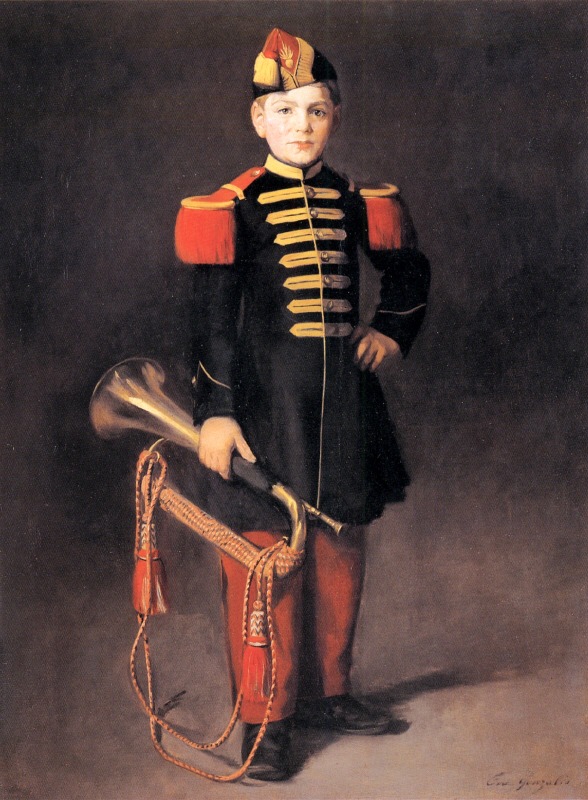
Gonzales, detail, visipix.com

“Why do they have to keep their eyes facing forward?” my son asks. We’re watching the film, Annapolis.

“They have to keep their focus,” I say, though what do I know of soldiers or navel academies?

My best guess is that the Mid-shipman is trying to see if he can provoke the plebes to react, testing their strength in the face of anger or fear.

I don’t typically share movies about soldiers with my boys, but we are heading to my father’s new home in Annapolis for Thanksgiving and I thought this DVD might lend a sense of place.

As a young teen, I lived on the army base at West Point. Soldiers ran in the woods behind my house in full fatigues with heavy packs and boots–in the heat of summer.

I saw the heads of plebes shaved in the courtyard outside the barracks when they arrived, and I was there the year that the first women were admitted to the Academy.

You could drive right into the heart of the campus then, and even years later when I returned to visit the base, before 9/11.

I watched soldiers march on winter weekends in the cold snow, paying off demerits. I saw them faint in summer pageantry. I knew that plebes couldn’t date. I’d eaten in their mess hall and witnessed the hoops there were simply to eat.

Despite this intimacy with a soldiers training, I don’t respect the job of killing. I’d like to see our military be creative with their talents and resources.

I know it isn’t always this simple, but I did stumble upon something that shed some light inside my own troubled heart around what soldiers do. It came from the question my young son asked.

Why do they have to keep their eyes facing forward, stayed with me all evening, and was there again the next morning when I woke.

This inquiry led me to explore a deeper connection with a soldier’s training.

“Facing forward” lends presence to what is right in front of you–without succumbing to the distraction of  fear, anger, exhaustion, and no doubt, self-doubt.

In this way, military training might be very Zen, although I’m not an expert there either.

In the film Annapolis, my sons witness the steady focus demanded of soldiers, in the face of spewing insults, assaulting weather, pain, fatigue, hunger, and whatever else the human mind can conjure up in the form of suffering.

I don’t know how they’re able to carry this type of focus into the battlefield, but I’m sure it serves all who do. With deep presence, there is an absence of resistance, fear, escape.

I wonder, however, how much are they able to salvage from this gift of presence?

Fedotow, detail, visipix.com

From what I know of veterans, they simply can’t remain present to all they saw or did or endured.

They turn away. They compartmentalize. They anesthetize. They experience or inflict pain. They reap heaps of punishment on themselves, becoming their own drill sergeant. And sometimes, they become the enemy itself, taking their own life, or the lives of their comrades, or the lives of those they’ve sworn to protect–their families or community members.

But what if like my son so aptly witnessed, they were able to keep looking forward?

What if their training included such presence after their service was complete?

What might come of that?

Great healing I suspect. In being present, even to that which horrifies us, we release and soften and accept, and then all there is… is love.

This truth is echoed in the lives of soldiers who “live” to share their stories and fight their way toward peace, on the inside. And in that discovery, each lends his voice to those who proclaim the futility of war through the generations.

With clear vision, a soldier’s astounding ability to focus could be taken into the world in service–in the kind of service, that she doesn’t have to turn away from when he comes home–in the kind of service that he can look in the eye without shame or hatred–in the kind of service that can change the world, one heart at a time. One soldier at a time. One pair of eyes looking forward at a time.

I recently attended the premier of the film, Taking Root, a documentary about Wangari Maathai, the activist, awarded the Nobel Peace Prize for her environmental action in her country of Kenya. Wangari was present at the viewing, as were the filmmakers who live in our town.

In the great breadth of her life’s work on behalf of the environment, Wangari convinces the military that their job as protectors, includes the land, and so they too join her in her campaign to plant trees, reforesting arid land, and improving lives around them.

Bosch, detail, visipix.com

This kind of rethinking about the role of protector is just a drop in the empty bucket of the terror faced around the world, but this is how change is watered.

As I revisit this piece of writing following a rise in military suicides, a son of our own arrives in Iraq. Joseph is not a biological son, but a son of our community, a young man I’ve watched grow up.

He came to this country from Ethiopia as a boy, and has now been sent across another sea as an American soldier.

I know his beautiful spirit.
I know some of the pain his young life held.
I know he lost most of his family to AIDs.
I know he watched both parents and his grandmother die.

Though Joseph was welcomed into our small rural community with open arms, he faced hatred when he went to high school in the neighboring town for the color of his skin.

Perhaps becoming a Marine after graduation was his way of finding place. I know that his childhood dream was to return to his Ethiopia and help the children there.

He wanted to buy a farm and raise cows, like those he tended as a boy in mountains of Ethiopia.

Carpaccio, detail, visipix.com

But America doesn’t fund those kind of dreams, not for teenage boys, particularly those with less means. Instead we train them to kill others in far away places and then expect them to return “home,” and live as if it never happened.

These same crimes would land Joseph in jail in the states, and it is he who will have to come to peace with that incongruency.

And it is WE, who hold the responsibility of sending our children to such places of anguish outside–and inside–themselves.

And so the military will hire more therapists and increase spending to support soldiers with their mental health or their missing limbs or lost comrades or visions of death while the rest of the country will worry about the economy which relies so heavily on perpetuating this machine of hopelessness and cruelty.

I wonder if it might help if we all did that to which my young son bore witness–face forward. Can we find a soldier’s strength to face forward in our lives and do the work that needs doing.

And to let that work be of service to others–the kind of service that lends itself to other “drops” of change…

Until the bucket of terror is tipped,

And we have watered a lush new world.

(November 2007)

2012 update: More US soldiers are losing their lives to suicide than from enemy forces, the Pentagon reports… at a rate of about one per day, with 18 attempts daily.

2013 update, from Remembering American’s Veterans in 2013

  • Veterans account for 20 percent of national suicides.
  • An estimated 22 veterans committed suicide each day in 2010, according to a report from the U.S. Department of Veterans Affairs.
  • Nearly 35 percent of deployed service members experience symptoms of post-traumatic stress disorder, or PTSD, according to Stanford University estimates.
    • 27 percent of Army soldiers met the criteria for alcohol abuse in three or four months after returning from Iraq, according to a 2011 study by the National Institute for Drug Abuse.
    • A 2009 Pentagon health survey found that one in four soldiers had abused prescription drugs.
    • Combat veterans are 31 percent more likely to begin binge drinking than service members who do not experience combat.

2017 updates: